Social Network Strategies
Enhance Peer Outreach Approach (EPOA) “MariTEST and beshTEST” in 2022 and Adoption of ALTER Implementation (Alternative Access Point) in 2025
It all started with a simple question: What if we could turn social and sexual networks into pathways for HIV testing services and prevention? This led to the formation of The Social and Sexual Network Testing (SSNT) strategies that emphasize the power of people.
People are connected to people, and those connections create opportunities to share information, encourage HIV testing, and connect individuals to prevention and care. By using a peer-to-peer approach, the strategy also addresses one of the program’s key challenges: HIV-related stigma. Because the conversation and support come from within the community, the approach helps break down barriers that may otherwise prevent people from seeking HIV testing and prevention services. Instead of having CBOs and peer educators work against those barriers from the outside, the community itself becomes part of the solution.
Throughout the project’s four years of implementation, two SSNT strategies emerged. The first was Beshtest—a referral-based approach that leveraged community connections. Beshtests encouraged their peers to get tested for HIV and, when appropriate, connected them to PrEP.
BESHTEST members could be anyone. But for some, being a referrer became more than just a role. They went the extra mile—literally. Some would use their own motorcycles or cars to bring their peers to testing services, making sure that a referral became an actual connection to care.
“Being a Beshtest connects me to a completely new community, where I see my purpose. To help people know their HIV status and get the help they need is fulfilling."
-Jethro T., Beshtest, FY 2022
For others, that involvement became a stepping stone. Some became volunteers, while others eventually joined the HIV program themselves. What started as simply referring a friend or a peer grew into a deeper commitment to the community.
From its implementation in FY 2022 to the present, BESHTEST has grown into a network of 61 members who have referred 1,021 peers for HIV testing. Of these, 60 were found reactive, giving us a 6% reactivity rate. For those who tested reactive, the referral did not end with testing. They were encouraged and supported to access HIV treatment, with most successfully linked to care. More importantly, among those who tested nonreactive, 21% were successfully linked to PrEP for HIV prevention.
It was from this experience that we saw an opportunity to go beyond referral. Building on the innovation pioneered by EpiC through ALTERS, we took the next step in our SSNT journey—bringing HIV self-testing and PrEP closer to the community.
From referral to access. From connection to action. This is where ALTERS begins. The ALTERS strategy is the second strategy under SSNT. Just like BESHTEST, it uses community connections to reach people—but takes it one step further by bringing prevention directly to them. Pioneered by EpiC, ALTERS brings HIV self-testing and PrEP closer to the community.
The first wave of ALTERS was facilitated by EpiC, which recruited eight (8) ALTERS members. During this initial wave, 45 self-test kits (STKs) were distributed, with a 4% reactivity rate. Among the nonreactive peers, 21% were successfully enrolled in PrEP.
As the implementation of ALTERS expanded from February to May 2026, however, several challenges emerged. One of the major challenges encountered was the technical limitations of the monitoring tools used to support the strategy, particularly the MS Forms and QuickRes booking system. These technical issues affected the smooth documentation, monitoring, and coordination of ALTERS activities.
But these challenges did not stop us from doing more. With the guidance and support of EpiC, LAKAN launched Wave 2 of ALTERS in June 2026. This time, the strategy gained even greater community participation, with twenty (20) volunteers stepping forward to become ALTERS.
From eight volunteers in Wave 1 to twenty in Wave 2, the community was showing us that there was not only a demand for HIV prevention—there was also a willingness to become part of delivering it.
Rather than seeing the challenges from Wave 1 as setbacks, we treated them as opportunities to improve. The lessons we gained helped us develop new ideas and innovations to strengthen and streamline the entire ALTERS implementation process.
To address the challenges encountered during Wave 1, the Junior M&E, under the direction and supervision of the Program Manager and Senior M&E, developed the ALTERS Tool. The tool brought several key functions into one system: an integrated digital HTS and PrEP form, a points-monitoring dashboard to track performance, and an HTS export module that made OHASIS encoding more convenient.
Wave 2 showed a stronger reach for ALTERS, with 130 peers receiving and using self-test kits. Of those tested, 4% were found reactive. More importantly, among the nonreactive peers, 28% were successfully enrolled in PrEP—showing how ALTERS was able to move beyond testing and connect people directly to prevention.
The wave 2 ALTERS showed more interest and participation in the strategy. They proactively coordinate and cooperate with the facility they are assigned at.
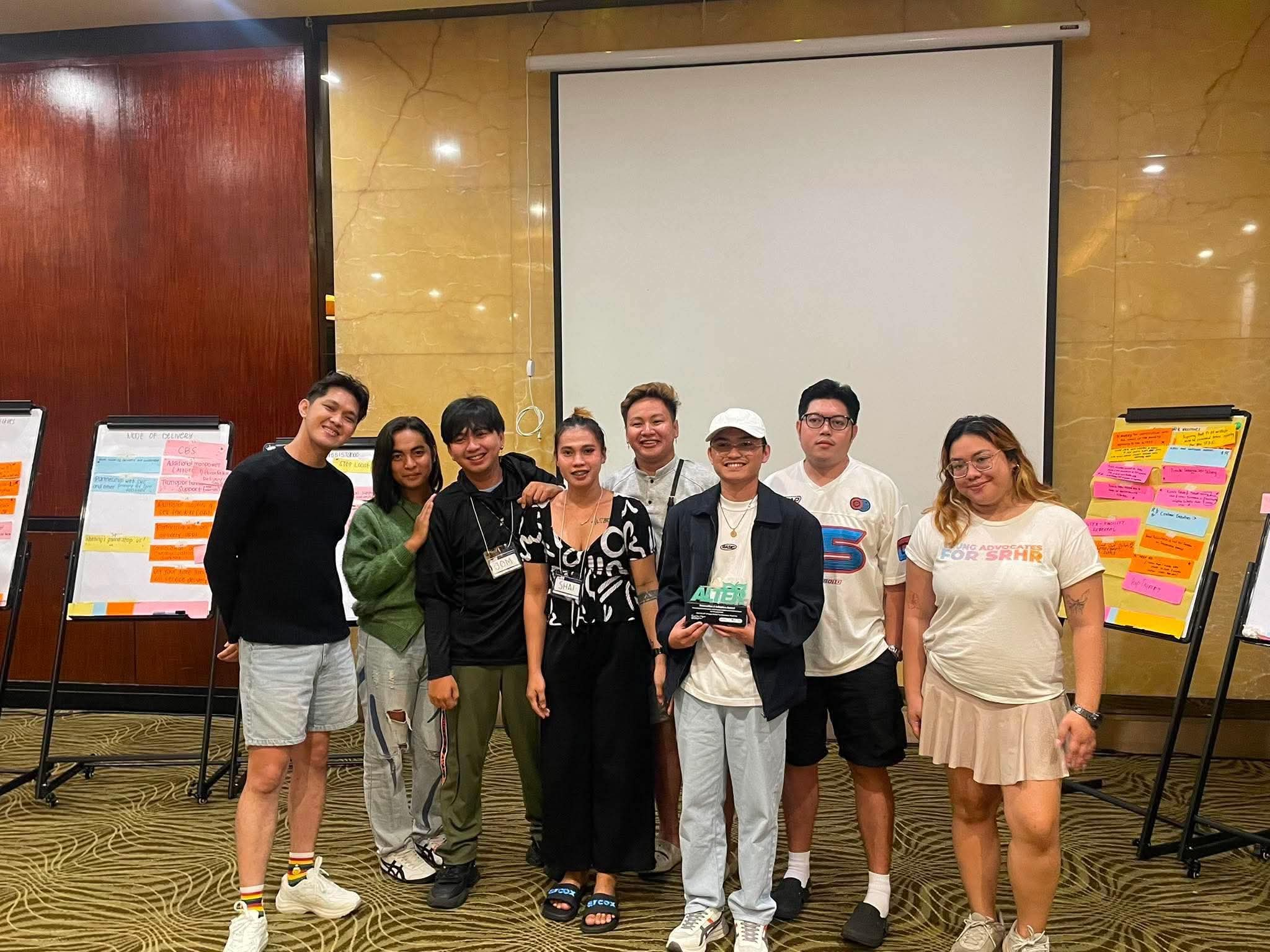
Last August 23, 2026, the ALTER Tool developed by the Junior MNE for the LAKAN Network received an award from EpIC during the ALTER strategy review for Innovation and Initiative Award for turning ideas into action and bringing creativity and initiative to peer-led HIV prevention. The Program Implementation Officer received the award together with the ALTER wave 1 (see Image 3).
ALTERS demonstrates how community empowerment and digital innovation may strengthen peer-led HIV prevention by bringing HIV self-testing and PrEP closer to the community while improving implementation through technology. More importantly, its journey reminds us that challenges can become opportunities for innovation, and when people are equipped with the right tools, knowledge, and support, they can become powerful agents of change in expanding access to HIV services.
“I have witnessed an incredible transformation in our community since we began conducting HIV awareness and outreach activities last July. Initially, many people were influenced by misconceptions and fear. However, through consistent education and awareness efforts, stigma is gradually diminishing. More young people are now becoming open to getting tested for HIV.”
-Alter Kite, Alter Wave 2